Determining when early land plants expanded across terrestrial environments and began to influence Earth’s system is a central question in Earth system evolution. A research team led by Prof. ZHAO Mingyu at IGGCAS, has discovered evidence suggesting that land plants may have started reshaping Earth’s surface environment much earlier than previous recognized. Their findings were was published in Nature Ecology & Evolution.
Land plants differ fundamentally from marine primary producers in that they generate organic matter with much higher organic carbon-to-phosphorus ratios. As land plants spread across continents, terrestrial photosynthesis intensifies, increasing organic matter production on land. This organic matter was subsequently transported to the oceans, raising organic carbon to total phosphorus ratios (Corg/Ptotal) preserved in marine sediments. Because terrestrial organic carbon production and marine burial are closely linked, Corg/Ptotal ratios in marine siliciclastic sediments provide a valuable proxy for tracking terrestrial organic carbon input and net primary productivity on land.
Under the guidance of Prof. ZHAO Mingyu, postdoctoral researcher CAI Jiachen analyzed marine siliciclastic sediments records spanning a range of redox conditions. The team identified a pronounced increase in Corg/Ptotal ratios beginning around 455 million years ago. Evaluation of potential controlling factors indicates that the most plausible explanation for this shift is a marked increase in terrestrial net primary productivity associated with the early expansion of land plants. Mixing model results further suggest that since the Late Ordovician, terrestrial organic carbon accounted for approximately 42 ± 15% of total organic carbon buried in marine sediments—comparable with modern values (30–57%). Paleocontinental analysis indicates that the expansion of land plants may have occurred earlier on the Laurentian continent.
The study also reveals that variations in Corg/Ptotal ratios show two distinct increases that coincide with major carbon isotopic excursions during the Late Ordovician. This relationship suggests that enhanced contributions of phosphorus-poor, carbon-rich terrestrial organic matter to marine sediments increase global organic carbon burial. Greater organic carbon burial would have promoted atmospheric oxygen accumulation while drawing down carbon dioxide levels. These effects may have been further strengthened by intensified silicate and phosphorus weathering linked to rapid land plant colorization. Together, these processes indicate that the earliest rise of land plants may have played a crucial role in driving Earth’s surface oxygenation and climate change. Their expansion could have contributed to Late Ordovician glaciation and may have indirectly influenced the mass extinction events during this period.
This research was conducted in collaboration with scientists from Yale University, the University of Exeter, the University of Leeds, the University of Science and Technology of China, and the Institute of Vertebrate Palaeontology and Palaeoanthropology, Chinese Academy of Sciences.
The work was supported by the Strategic Priority Research Program (Category A) of the Chinese Academy of Sciences (XDA0430202), the National Key Research and Development Program of China (2023YFF0806200; 2020YFA0607700), and the National Natural Science Foundation of China (92479106).
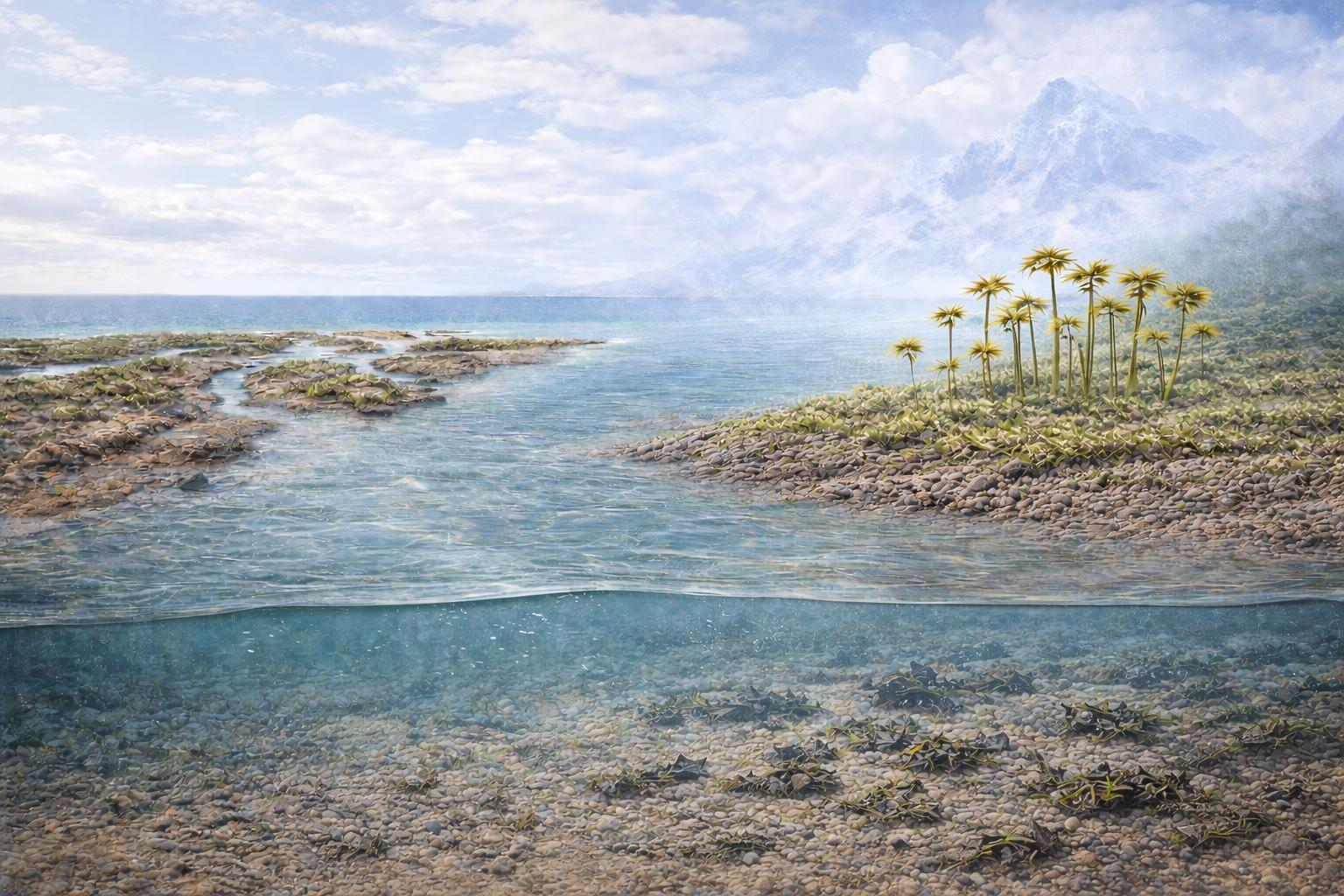
Early land plants reshaping Earth's surface environments in the Late Ordovician. (Image by CAI Jiachen)
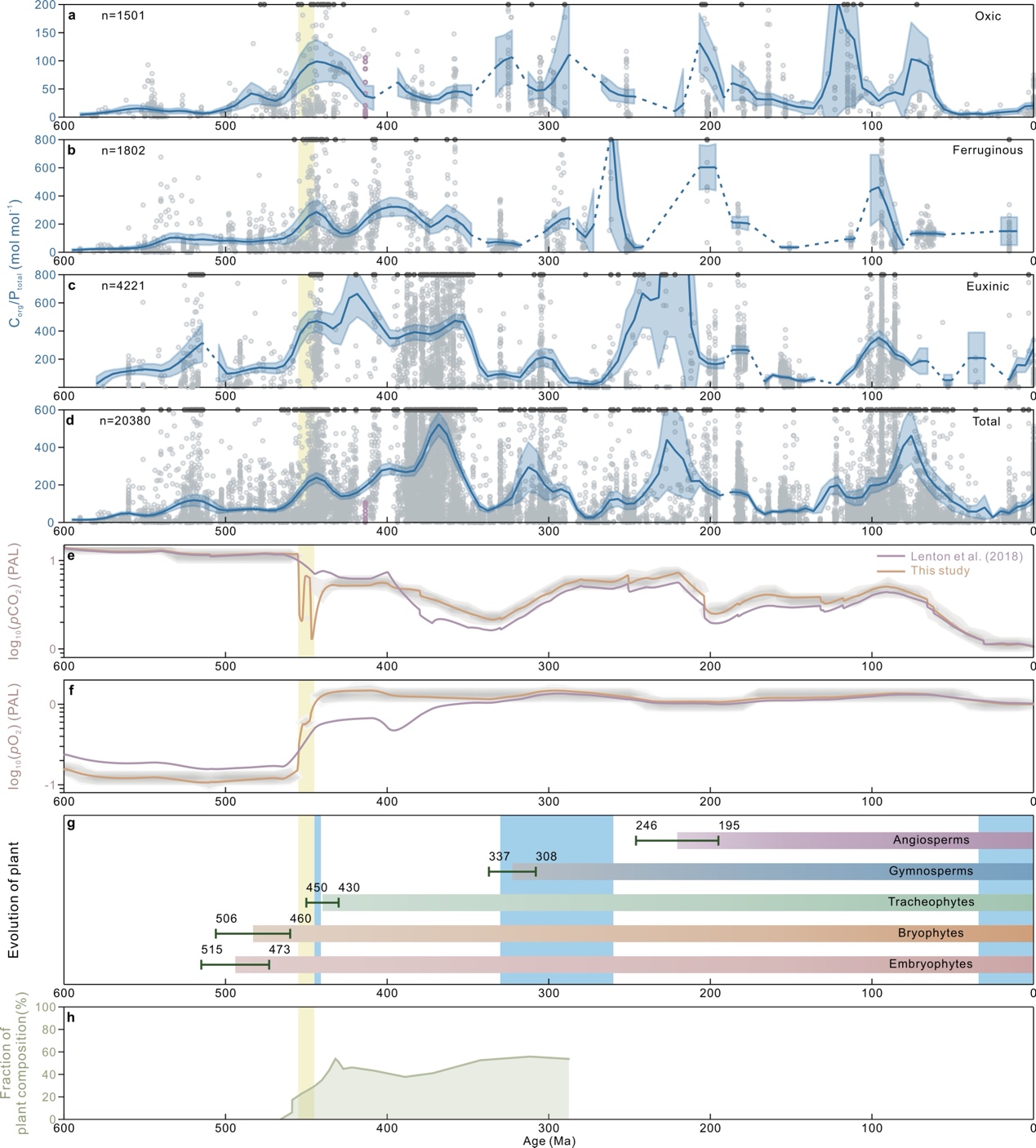
Figure 1 | Evolution of Corg/Ptotal ratio in marine siliciclastic sediments during the Phanerozoic. (Image courtesy of Prof. ZHAO Mingyu’s group)
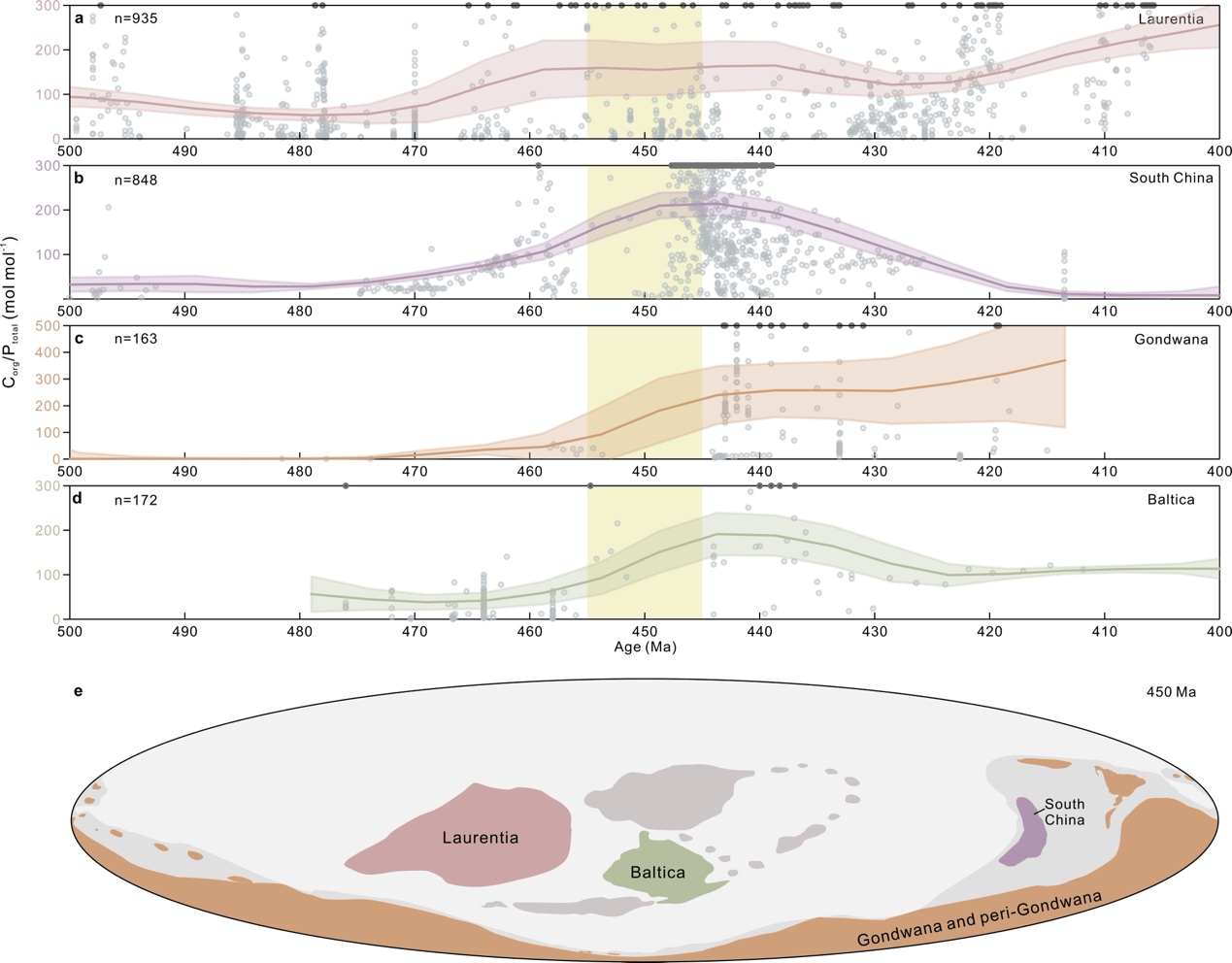
Figure 2 | Evolution of Corg/Ptotal ratios in marine siliciclastic sediments across different paleoplates. (Image courtesy of Prof. ZHAO Mingyu’s group)
Contact:
ZHAO Mingyu
lnslitute of Gedlogy and Geophysics, Chinese Academy of Sciences
E-mail: mingyu.zhao@mail.iggcas.ac.cn


